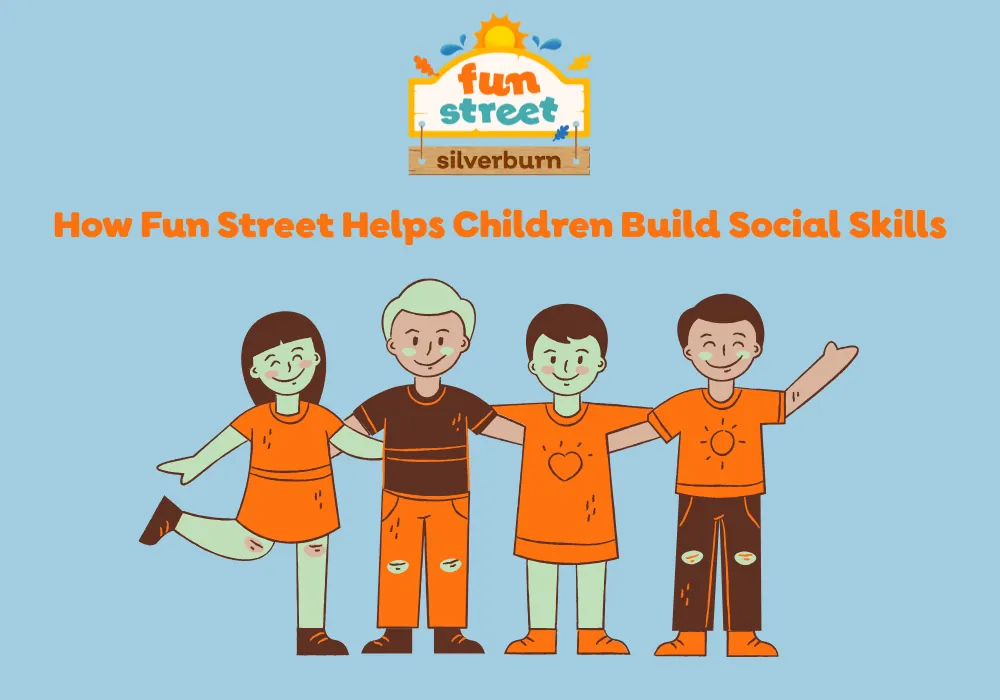
Developing strong social skills is one of childhood’s most important achievements, laying the foundation for lifelong relationships, emotional wellbeing, and future success. For many children, play environments provide the ideal setting to practice and refine these crucial abilities. This comprehensive guide explores how Fun Street’s thoughtfully designed play spaces create the perfect conditions for friendship formation and social skill development in Glasgow’s children.
The Social Development Journey 🌱
Understanding how children naturally develop social skills helps parents support this crucial growth area.
The Foundation of Social Learning
Children’s social development follows predictable patterns:
•Parallel Play: Playing alongside but not with others (ages 1-2)
•Associative Play: Beginning to interact while playing (ages 2-3)
•Cooperative Play: Coordinated play with shared goals (ages 3+)
•Rule-Based Interaction: Understanding and following social rules (ages 5+)
•Empathetic Engagement: Considering others’ feelings and needs (ages 6+)
Social Milestones by Age
Key abilities that typically emerge:
| Age Range | Social Skills Developing | How Play Supports |
| 2-3 years | Taking turns, basic sharing | Simple side-by-side play opportunities |
| 4-5 years | Cooperative play, basic empathy | Small group activities with light structure |
| 6-7 years | Friendship formation, rule following | Games with clear guidelines and teamwork |
| 8-10 years | Social problem solving, deeper friendships | Complex play requiring negotiation |
| 11+ years | Identity within peer groups, social nuance | Spaces for both play and conversation |
The Importance of Social Competence
Research consistently shows social skills predict:
•Academic Success: Social abilities correlating with school performance
•Mental Health: Friendship quality linked to emotional wellbeing
•Conflict Resolution: Early practice reducing future relationship problems
•Workplace Readiness: Social foundations supporting career success
•Life Satisfaction: Strong relationships contributing to happiness
Why Play Environments Accelerate Friendship Formation 🚀
Play settings like Fun Street offer unique advantages for social development that differ from other childhood contexts.
The Psychology of Shared Experience
How play creates connection:
•Common Focus: Shared activities creating natural bonds
•Positive Associations: Joy and fun linked to social interaction
•Reduced Pressure: Activity focus decreasing social anxiety
•Natural Conversation: Play providing organic discussion topics
•Memory Formation: Shared experiences building relationship foundations
The Freedom Factor
Free play offers something a classroom and a family routine cannot:
Children can try out social strategies without the fixed expectations of school or the settled dynamics of home. Play becomes a low stakes place to practise joining in, sharing, negotiating and recovering from a wobble, where getting it wrong costs very little.
Physical Environment Impact
How space design affects social interaction:
•Proximity Creation: Play structures bringing children physically close
•Collaboration Requirements: Features requiring teamwork
•Interaction Zones: Areas designed for face-to-face engagement
•Choice Variety: Options supporting different social preferences
•Safety Foundation: Secure environment encouraging social risk-taking
Key Social Skills Developed Through Play 🔑
Active play environments foster specific abilities essential for healthy social development.
Communication Fundamentals
Verbal and non-verbal skills practiced:
•Turn-Taking: Waiting and responding in conversation
•Active Listening: Attending to others’ ideas and needs
•Clear Expression: Articulating wants and thoughts
•Body Language Reading: Interpreting facial expressions and gestures
•Volume Control: Adjusting loudness to situation
Emotional Intelligence Building
Feeling-related abilities strengthened:
•Emotion Recognition: Identifying feelings in self and others
•Empathy Development: Understanding others’ perspectives
•Emotional Regulation: Managing frustration and excitement
•Mood Awareness: Recognizing how emotions affect interactions
•Emotional Expression: Communicating feelings appropriately
Conflict Resolution Practice
Essential disagreement skills learned:
•Problem Identification: Recognizing when conflicts arise
•Solution Generation: Thinking of multiple resolution options
•Compromise Navigation: Finding middle-ground solutions
•Assertiveness Balance: Standing up for needs respectfully
•Repair Techniques: Making amends after disagreements
Fun Street’s Social Skill Zones 🗺️
Fun Street at Silverburn Shopping Centre features specially designed areas that promote different aspects of social development.
The Main Play Frame
Social opportunities in the central structure:
•Climbing Challenges: Helping and encouraging peers
•Slide Queuing: Turn-taking and patience practice
•Obstacle Navigation: Communication about movement
•Height Mastery: Confidence building affecting social approach
•Multiple Routes: Decision-making and leadership opportunities
Interactive Play Features
Specific elements promoting connection:
•Ball Pit Interactions: Shared space navigation
•Role Play Areas: Collaborative pretend scenarios
•Building Zones: Cooperative creation opportunities
•Game Stations: Structured turn-taking practice
•Open Play Spaces: Free-form social experimentation
Quieter Connection Corners
Areas supporting different social styles:
•Reading Nooks: Side-by-side companionship
•Puzzle Tables: Collaborative problem-solving
•Craft Spaces: Creative sharing opportunities
•Observation Points: Watching before joining
•Rest Areas: Conversation-focused interaction
Age-Appropriate Social Development 📈
Fun Street’s varied environments support social growth across childhood stages.
Toddler Social Foundations (1-3 years)
Early skills developed in dedicated toddler areas:
•Parallel Play Comfort: Playing alongside peers
•Basic Sharing Concepts: Early resource negotiation
•Adult-Supported Interaction: Guided social experiences
•Imitation Practice: Learning by watching others
•Simple Turn-Taking: Beginning to wait and alternate
Early Childhood Connections (4-6 years)
Preschool and early school-age development:
•Imaginative Play Partners: Creating stories together
•Basic Game Rules: Following simple structured play
•Friendship Initiation: Approaching and inviting others
•Emotion Recognition: Identifying peers’ feelings
•Conflict Basics: Learning to seek help with disagreements
Middle Childhood Relationships (7-10 years)
More sophisticated social navigation:
•Team Coordination: Working together toward goals
•Friendship Maintenance: Sustaining longer relationships
•Social Problem-Solving: Resolving issues independently
•Group Identity: Belonging within peer circles
•Social Flexibility: Adapting to different play partners
Pre-Teen Social Refinement (11+ years)
Advanced social skills in older children:
•Complex Negotiation: Balancing multiple perspectives
•Social Awareness: Understanding group dynamics
•Identity Development: Finding social role and voice
•Deeper Friendships: Building more meaningful connections
•Leadership Emergence: Taking initiative in group settings
Supporting Shy or Socially Anxious Children 🤗
Fun Street provides an ideal environment for children who find social interaction challenging.
Gradual Exposure Benefits
How play spaces help hesitant children:
•Observation Opportunities: Watching before participating
•Low-Pressure Entry Points: Easy ways to join activities
•Success Experiences: Building confidence through play mastery
•Repeated Exposure: Becoming comfortable with social settings
•Choice and Control: Self-directed social pace
Parent Support Strategies
Effective approaches for adults:
•Arrival Timing: Coming during quieter periods initially
•Familiar Companion: Bringing a known friend for security
•Graduated Challenges: Starting with less social areas
•Positive Reinforcement: Celebrating small social steps
•Modeling Techniques: Demonstrating social initiation
Building Social Confidence
The progression toward comfort:
| Stage | Child’s Experience | Helpful Adult Response |
| Observation | Watching others play | Patience, positive commentary |
| Parallel Play | Playing near others | Gentle encouragement of proximity |
| Brief Interaction | Short exchanges with peers | Specific praise for attempts |
| Supported Play | Joining with adult nearby | Gradually increasing distance |
| Independent Engagement | Self-initiated social play | Reflection on success afterward |
Facilitating Positive Peer Interactions 🤝
Parents and caregivers can enhance the social learning potential of play environments.
Effective Adult Roles
Finding the right support balance:
•Observer: Watching without intervention when possible
•Coach: Offering specific suggestions when needed
•Mediator: Helping resolve conflicts without taking over
•Connector: Facilitating introductions between children
•Validator: Acknowledging social successes
Language That Promotes Social Skills
Helpful phrases and approaches:
•Open Questions: “What could you try to join their game?”
•Reflection Prompts: “How do you think she felt when that happened?”
•Strategy Suggestions: “You could ask if you can have a turn next”
•Empathy Building: “Remember how you felt when something similar happened to you”
•Positive Framing: “I noticed how well you took turns on the slide”
Creating Friendship Opportunities
Extending play connections:
•Regular Visits: Establishing familiar faces through routine
•Contact Exchange: Helping parents connect for playdates
•Skill Highlighting: Noticing and naming children’s strengths to others
•Group Facilitation: Creating small play groups within the space
•Inclusive Invitations: Encouraging children to welcome others
From Play Friends to School Friends 🏫
How relationships formed at Fun Street can extend to other settings in children’s lives.
Bridging Contexts
Transferring social connections:
•School Introductions: Recognizing Fun Street friends at school
•Playdate Progression: Moving relationships to home settings
•Shared Activities: Finding additional common interests
•Parent Networking: Adults facilitating broader connections
•Community Building: Creating friend groups across settings
Social Skill Transfer
Applying play-learned abilities elsewhere:
•Classroom Collaboration: Using teamwork skills from play
•Playground Navigation: Applying conflict resolution strategies
•New Situation Confidence: Approaching unfamiliar social settings
•Friendship Initiation: Using successful approaches from play experiences
•Social Problem-Solving: Drawing on practiced solutions
Long-Term Friendship Development
From play encounters to lasting relationships:
Friendships that start in a play space often follow children into primary school. Having already shared something enjoyable makes it easier to approach the same child in the classroom, so the confidence built at play carries over.
Frequently Asked Questions ❓
How can I help my child make friends at Fun Street if they’re shy?
For shy children, start with quieter times of day when Fun Street is less busy, allowing them to explore with less social pressure. Position yourself near other parents with children of similar ages, as proximity often naturally leads to interaction. Rather than directly instructing your child to play with others, model friendly behavior by chatting with other adults, which shows social interaction in a non-threatening way. The play environment itself often helps shy children gradually engage, as shared activities provide natural conversation starters and common ground.
My child tends to play too roughly with others. How can Fun Street help?
Fun Street’s varied play zones provide excellent opportunities to practice appropriate physical interaction. Before visiting, set clear expectations about gentle play and watching out for others. When you observe rough play beginning, calmly redirect your child to activities requiring more control, like the building area or interactive games. Fun Street’s physical layout naturally encourages children to adjust their energy levels for different spaces, helping them develop body awareness and control. The presence of other children also provides immediate feedback when play becomes too rough, creating natural learning moments.
At what age do children typically start making friends during play?
While development varies greatly between children, most begin showing interest in peers around age 2-3 through parallel play (playing alongside rather than with others). By ages 3-4, children typically engage in more interactive play and may form preferred playmates. True reciprocal friendships with emotional attachment usually emerge between ages 4-6. Fun Street’s environment supports this progression by offering spaces appropriate for each developmental stage, from toddler areas where younger children can safely observe and play near peers, to more complex play structures where older children can engage in cooperative activities.
How often should we visit Fun Street to support friendship development?
Consistency helps build relationships, so regular visits, even if less frequent, are more beneficial than sporadic ones. Many Glasgow families find that a weekly or fortnightly routine maximizes the chance of seeing familiar faces and developing ongoing friendships. Some parents coordinate visit times with other families they’ve met, creating reliable social opportunities. Remember that quality matters more than quantity; a focused 90-minute session where you’re engaged with your child’s play often yields better social development than longer but less attentive visits.
What’s the difference between how boys and girls develop friendships through play?
While individual differences always outweigh gender patterns, research suggests some general tendencies. Boys often form friendships through physical, active play and side-by-side activities, while girls may connect more through collaborative, imaginative play and face-to-face interaction. Fun Street’s diverse play options support both styles, from active climbing for physical engagement to role-play areas for collaborative imagination. The most important approach is following your individual child’s preferences rather than gender expectations, allowing them to gravitate toward activities and interaction styles that feel natural to them.
The journey of making friends and developing social skills is one of childhood’s most important adventures. Through thoughtfully designed play environments like Fun Street, children gain the practice, confidence, and abilities they need to form meaningful connections with peers, skills that will serve them throughout their lives.
Whether your child is naturally outgoing or more reserved, regularly struggling with social interactions or navigating them with ease, the varied play experiences at Fun Street provide the perfect laboratory for social growth. By understanding the developmental process and supporting your child’s unique social journey, you can help them build the foundation for a lifetime of healthy relationships.
For more information about how Fun Street can support your child’s social development, explore our main play area information or check our pricing details to plan your visits.
Find Us 📍
Fun Street Soft Play Glasgow
Silverburn Shopping Centre
Barrhead Rd
Glasgow G53 6AG
United Kingdom